Which Neurotherapy Device Is Best for Your Clinic or Recovery?
You may be wondering: “Why Should I go with a Phoenix Waveform?”
Here’s the straight answer: if you’re looking for professional-level neurological therapy, real results, and no contract or inflated cost — Phoenix Waveform delivers the power with better value.
The Phoenix Waveform is Complete Therapy Toolkit — Not Just One Waveform
The Phoenix Waveform has pre-set Diect Current Frequencies at 500Hz, 300Hz, 165Hz, 135Hz, 40Hz, and 10Hz.
The Phoenix Elite has another stronger program called the Phoenix Plus which is at 500 Hz but has a longer pulse duration which makes the current even stronger.
We have included other forms of electrical currents in addition to the direct currents.
The Phoenix Waveform also has KOTZ Russian Stimulation, Interferential, Frequency Specific Microcurrent, G-Pulse Facial Micrcurrent, TENS, and tradional Neuromuscular Electrical Stimulation
What’s the Difference?
ARPwave & Therastim
-
Long-standing devices used in sports rehabilitation.
-
Use sinusoidal (sine wave) or older stimulation waveforms.
-
High costs: expensive units, long-term leases, usage fees, licensing.
-
Many clinicians report good results — but feel the cost, complexity and limitations.
Phoenix Waveform Neurotherapy+1
Phoenix Waveform
-
Designed by Dr. Jeff Banas to provide high-intensity direct-current (DC) neurotherapy with a cleaner square-wave waveform.
-
Same underlying mechanism of action: neuromuscular re-education, nerve activation, pain-reduction.
Phoenix Waveform Neurotherapy+1 -
Offers dramatically lower cost, no usage minutes, no commercial licensing fees.
Phoenix Waveform+1 -
Built for clinics, home users and performance training — all under one device umbrella.
Why the Waveform Matters
The type of electrical waveform matters. For example:
-
Older devices used sine wave stimulation, which can require higher intensity and may be less efficient.
Phoenix Waveform Neurotherapy+1 -
Phoenix uses a square-wave DC pattern, which allows for more efficient nerve/muscle activation, fewer unwanted reflex spasms, and potentially deeper effect.
Phoenix Waveform Neurotherapy+1
Feature Comparison Table
| Device | Typical Price | Waveform / Mechanism | Notes |
|---|---|---|---|
| Phoenix Waveform | $3,500-$4100* | High-intensity DC neurotherapy (square wave) | Designed by a clinician for clinicians and individuals. |
| ARPwave | $12,000-$25,000* | Older sine wave / mixed waveforms | Long history, high cost, usage/leasing model. |
| Therastim | $18,000+* | Sine wave / older tech | Similar legacy to ARPwave, fewer modern updates. |
*Approximate pricing. Please verify current model and package.
Which One Is Right for You?
-
Clinic owners / high volume providers: If cost, leasing and usage fees are limiting your growth — Phoenix gives you full professional capability without ongoing fees.
-
Athletes or serious rehab users: You still want top-tier function — Phoenix offers the same mechanism at far lower cost.
-
Home users / mobility-focused users: You don’t need full leasing contracts. You want results and simplicity — Phoenix is purpose-built for you.
Our Promise to You
With Phoenix Waveform:
-
No leasing required
-
No “usage minutes” billing
-
No commercial licensing fees
-
Training and support included
-
A powerful neurotherapy device built for performance, rehab and recovery
Phoenix Elite and Professional
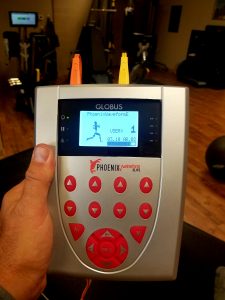
Waveform: Square wave with the carrier at 10 kHz, and zero net charge but tweaked to have a DC-like component; it is coupled with a low-frequency waveform at 500 Hz and 500 µs of pulse width positive and 500 µs negative and options at 300µs pulse width positive and 300 µs negative. Electron flow is reversible. The output is a constant current going up to 120 mA on channels 1 and 3.
ARP Wave RX 100
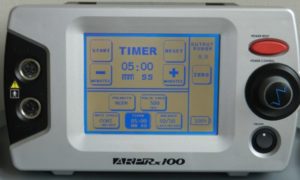
Waveform: Asymmetrical Wave
ARP Wave POV
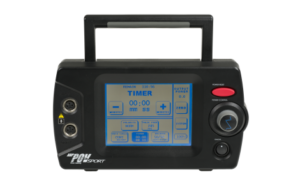
Waveform: Asymmetrical, Main Pulse Wave and Background Wave
From: ARPWAVE POV PDF
- Main Pulse frequency- 10 – 245 pulses per second (PPS); Adjustable
- Main Pulse duration – 375
- Background Pulse frequency – 10 kHz carrier signal
- Background Pulse duration – 25 us
- Output power – Between 0 – 0.65 watts RMS
- Balance – Output Power can be divided between 2 output channels in any proportion.
- Polarity – The direction of electron flow is reversible
- Battery – Lithium – Ion Battery
- External Power Supply — 100 – 240 VAC, 50 – 60 Hz input; 15 VDC output.
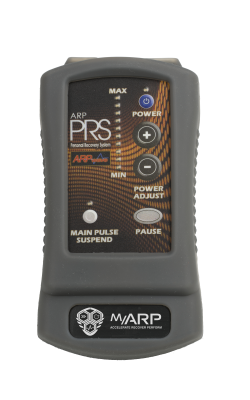
FROM ARPwave PRS PDF
- Main Pulse frequency – 10 – 245 pulses per second (PPS); Adjustable
- Main Pulse duration – 375
- Background Pulse frequency – 10 kHz carrier signal
- Background Pulse duration – 25 us
- Output power – Between 0 – 0.61 watts RMS Into 1 channel
- Polarity – One direction
- Battery – Lithium – Ion Battery
- External Power Supply – 100 – 240 VAC, 50 – 60 Hz input; 8.4 VDC output.
Does not contain Microcurrents or Grounding Therapy
Cost: $3999.00 (Lease)
Rental: $750.00 per month
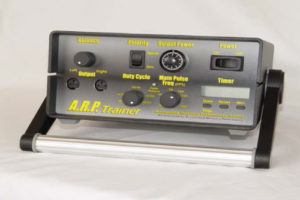
Therastim and ARPwave Trainer
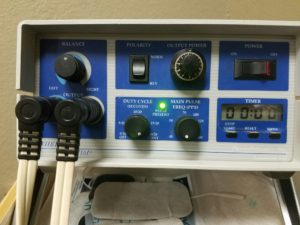
Waveform: Square Wave, Asymmetrical, Main Pulse Wave, and Background Wave
Cost: $7500 – $8000 (No longer in production and no longer serviced by ARPwave)
The following EMS Units really can not be compared to the Phoenix Waveform:
Marc Pro
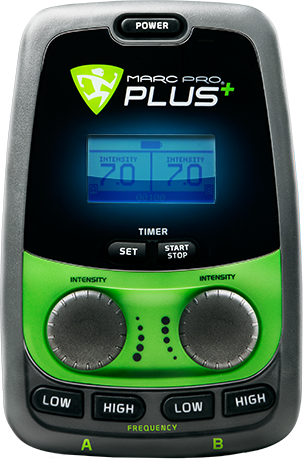
Waveform: Biphasic decaying waveform.
Technical Data: (From: http://marcpro.com/wp-content/uploads/2014/03/MarcProUserManual_L9_RevC_WEB_5.pdf)
• Voltage 0-35V
• Current 0-35mA
• Frequency 2Hz
• Bi-phasic waveform
• Pulse Duration 5ms; 1ms at 50% of max amplitude
Cost: $949.95
Compex Wireless
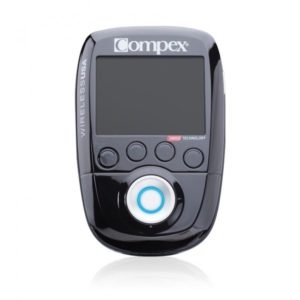
$799.99
Specifications (From: https://www.compexusa.com/media/Compex-Wireless-USA-User-Manual.pdf)
OUTPUT WAVEFORM Biphasic rectangular impulse with electrical mean equal zero (net zero DC). All electrical specifications are given for an impedance of 500-1000 ohms per channel. Channels: Four independent and individually adjustable channels that are electrically isolated from each other and earthed.
All the electrical specifications are supplied for an impedance from 500 to 1000 ohms per channel. Outputs: four independent and individually adjustable channels, electrically insulated from one another.
Impulsion form: constant rectangular current with compensated impulses to eliminate any direct element of continuous current to avoid any residual polarization from the skin.
Maximum impulse intensity: 120 mA.
Impulse intensity increments: manual adjustment of stimulation intensity from 0 to 999 (energy) by minimum increments of 0.25 mA.
Duration of impulses: from 300 to 400 μs.
The maximum quantity of electricity per impulse: 96 micro coulombs (2 x 48 μC, compensated). Typical impulse rise time: 3 μs (20%-80% of maximum current).
The frequency of impulses: 1 to 120 Hz.
Compex Sport Elite
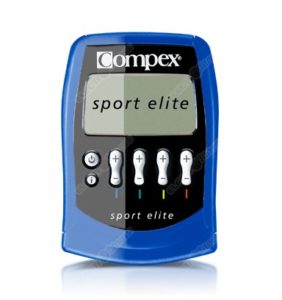
Waveform: Biphasic rectangular impulse with electrical mean equal zero (net zero DC).
Cost:$849
SPECIFICATIONS:(From: https://www.compexusa.com/media/mediamanager/compex-sport-elite-muscle-stimulator-user-manual-IFU-2.pdf)
OUTPUT WAVEFORM Biphasic rectangular impulse with electrical mean equal zero (net zero DC). All electrical specifications are given for an impedance of 500-1000 ohms per channel. Channels: Four independent and individually adjustable channels that are electrically isolated from each other and earthed
OUTPUT SPECIFICATIONS Pulse shape: Constant rectangular current with pulse compensation to eliminate any direct current component to prevent residual polarization at the skin level.
Maximum pulse intensity: 120 mA Pulse intensity increments: manual adjustment of stimulation intensity from 0 to 999 (energy) in minimum increments of 0.5 mA.
Pulse width: 200 to 400 μs
Maximum electrical charge per pulse: 96 micro coulombs (2×48 μC, compensated).
Standard pulse ramp-up time: 3 μs (20%-80% of maximum current).
Pulse frequency: 1 to 120 Hz
Individual results may vary.
Copyright 2025 Dr. Jeff Banas
Consult your physician or health care provider and follow all safety instructions before beginning any new exercise program, especially if you are pregnant, or have any medical condition. The contents on our website are for informational purposes only and do not constitute medical, legal, or any other type of professional advice. Read the Globus and Phoenix Training Manual Fully before using the EMS unit. Results will vary depending on the individual, personal health status, performance goals, and proper use of the device. Terms of Service, Disclaimer, & Privacy Policy


